One woman's story that author John Little still remembers
August 20, 2026
To mark the 25th anniversary of The Hospital by the River, we recently brought readers and supporters together for a special webinar with journalist and author John Little, who helped Dr Catherine Hamlin tell her remarkable story.
We received many thoughtful questions, including a few we didn’t have time to answer on the night. One reader asked John whether, among the many women he met during his time in Ethiopia, there was a story that had stayed with him.
Here is his response ...
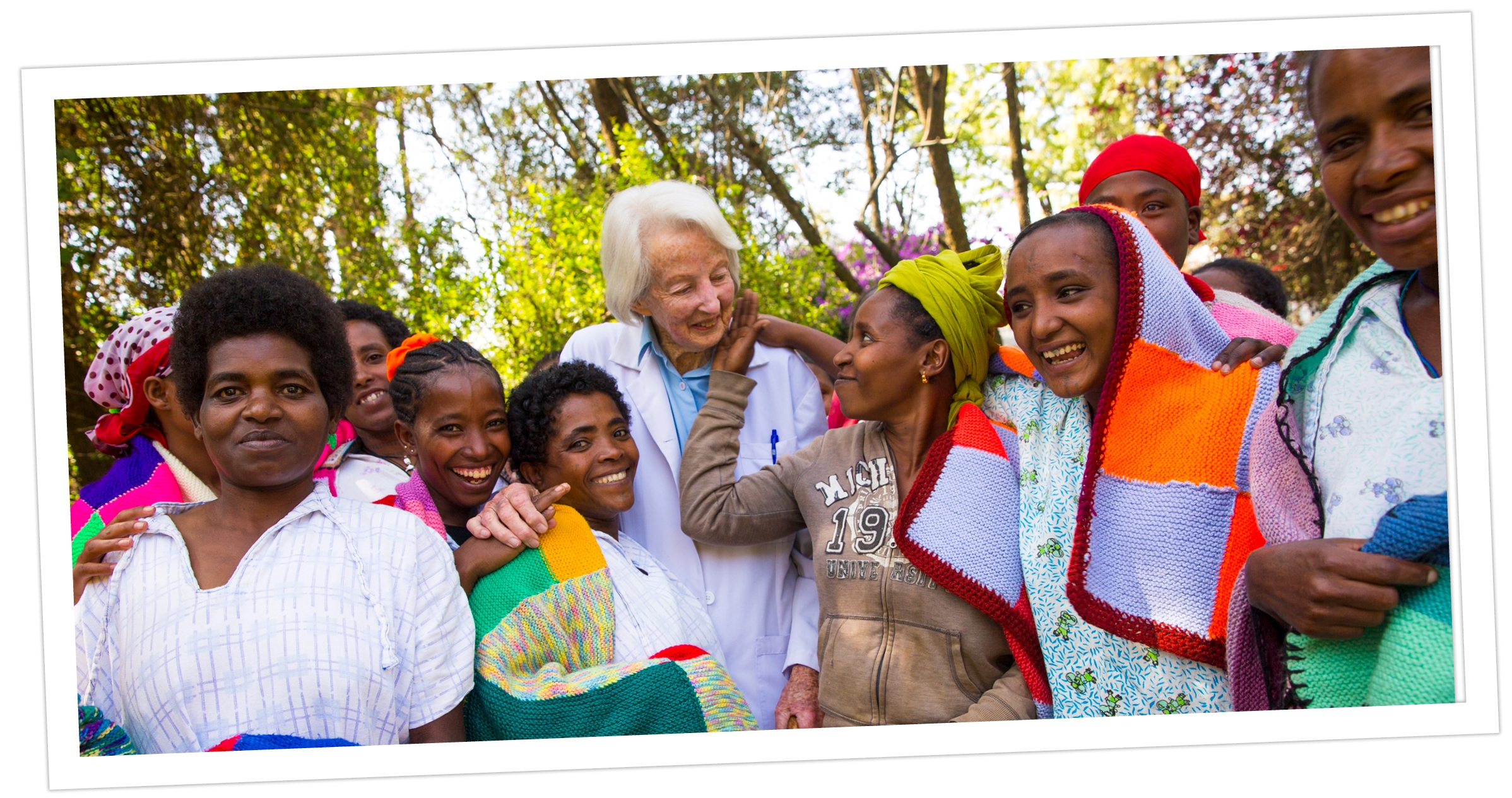
While helping Catherine write The Hospital by the River I met many women who had endured unimaginable hardship.
These encounters frequently left me in tears. I followed through their treatment and saw them being taken to the bus stop, cured, wearing their brand new dresses, to head back to their villages. I always wondered how their stories would end.
One of the most moving cases was Minsera. Minsera had been holding on to a rope while she was in labour to try to get purchase to push the baby out. The rope broke and she dislocated her hip. She had been carried in by a relative, after an all day journey by train, as she was unable to walk.
She was in a pitiful state: emaciated, anaemic, dehydrated, her clothes soaked in urine and soiled with bowel contents. She had been lying in bed for five months and had bed sores down her back down to the bone.
Catherine discovered that the reason her bones were so fragile was that she had tuberculosis. After eight months of intensive treatment the TB was cured, but Minsera’s left hip had been completely destroyed.
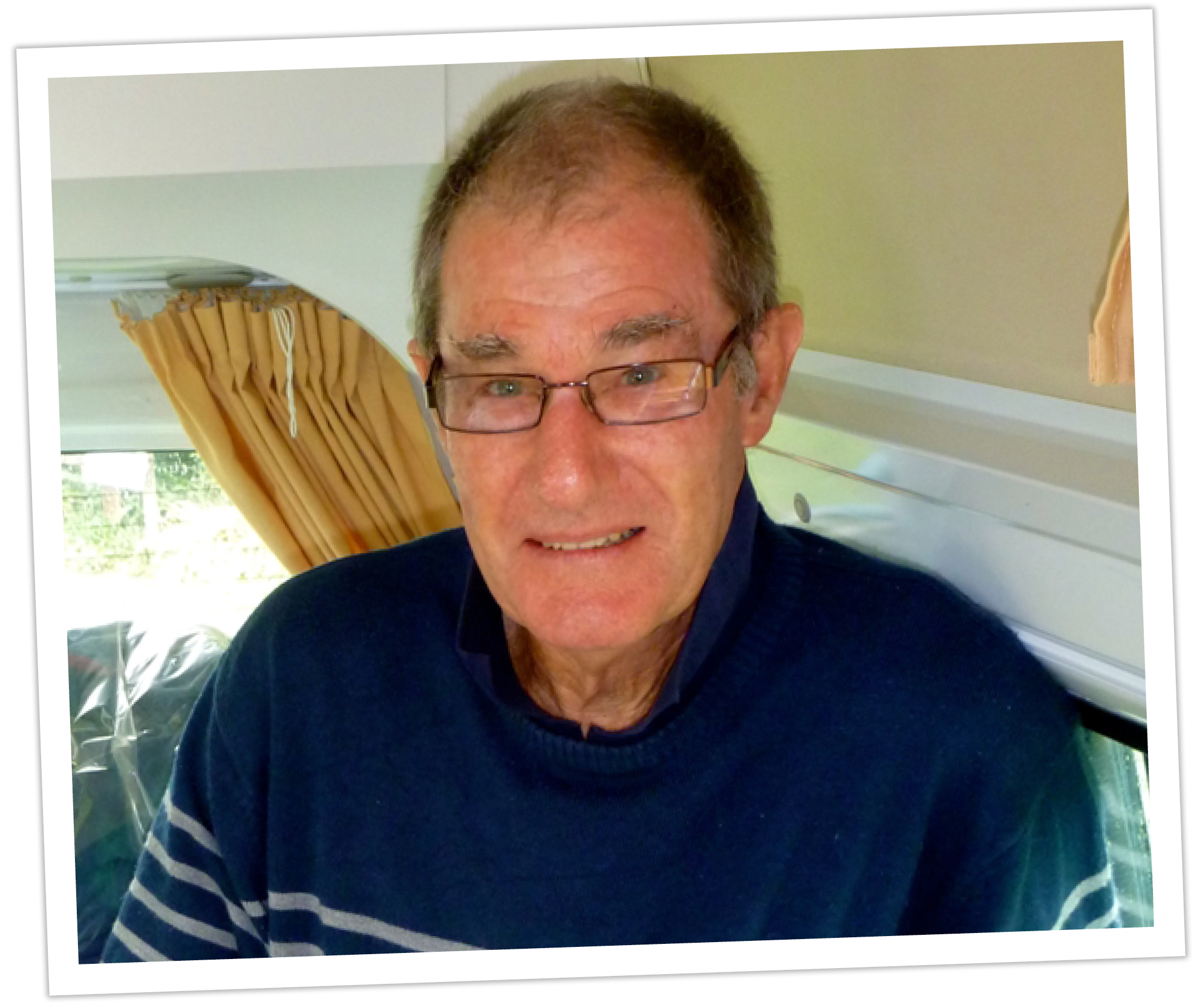
When I met Minsera she had been in the hospital for two years. She was walking with a stick and her left shoe had been built up. Access to her injuries was impossible at this stage as her leg could not be moved.
But Minsera was persevering with physiotherapy, and Catherine was hoping eventually to be able to deal with her huge rectal defect and close her colostomy.
Later she would need an ileal conduit as there was no bladder tissue left to repair. In the years which followed I often wondered what became of Minsera.
Seven years later I learned the end of the story when I wrote another book about the hospital: Catherine’s Gift. Minsera was still at the hospital working as a nurse aid. One evening when I knew she was on night shift I sought her out. When I had last seen her she was a frail little girl sitting on the edge of her bed, her stick legs dangling. She looked feeble and listless.
Now I was stunned to see a beautiful, vibrant young woman walking towards me. She had not yet changed into her uniform, and was wearing a long, pale blue dress which hid her built up shoe, a pretty cotton jumper in blue and white, and a royal blue headscarf with a white pattern. She had big silver earrings. It was all beautifully coordinated. Her face lit up with a vivacious smile.
I explained that I was here seven years ago and that I was writing a book. I asked her if she remembered what she was like then.
She smiled sweetly “I was very sick.”
“How do you feel now?”
“I am very happy.”
Well, I could see that. I did not really want to interrogate her. Everything that needed to be said was right there in front of me, in her glowing good health and her bright personality.
I asked if I could take a photograph and she posed cheekily in front of some patients. The flash went off and they gathered round to to exclaim over the picture.
I said goodbye and left, feeling foolishly happy.
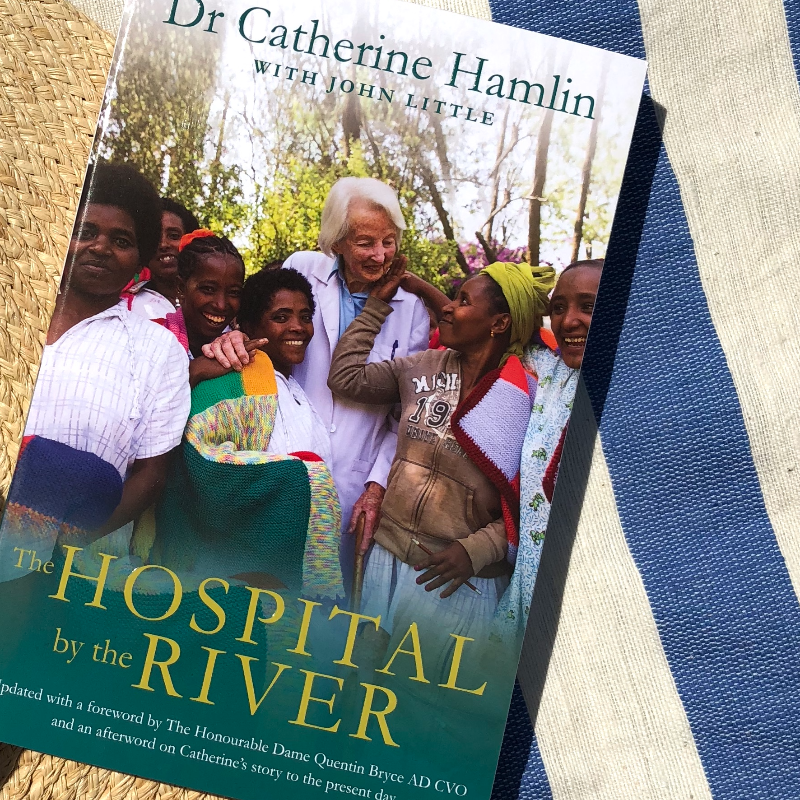
The Hospital by the River has been in print for more than 25 years.
It tells the extraordinary story of Dr Catherine Hamlin’s pioneering work in Ethiopia and her lifelong mission to restore health, dignity and hope to women living with obstetric fistula.
The book is available in print, as an e-book and as an audiobook.


Catherine Hamlin Fistula Foundation acknowledges the Traditional Owners and Elders past, present and emerging throughout Australia and the Gadigal people of the Eora Nation, the Traditional Owners of the land and waterways on which our Australian office is situated. We acknowledge the many ethnic groups in Ethiopia and their ancestral and cultural connection to the land where our work is undertaken.